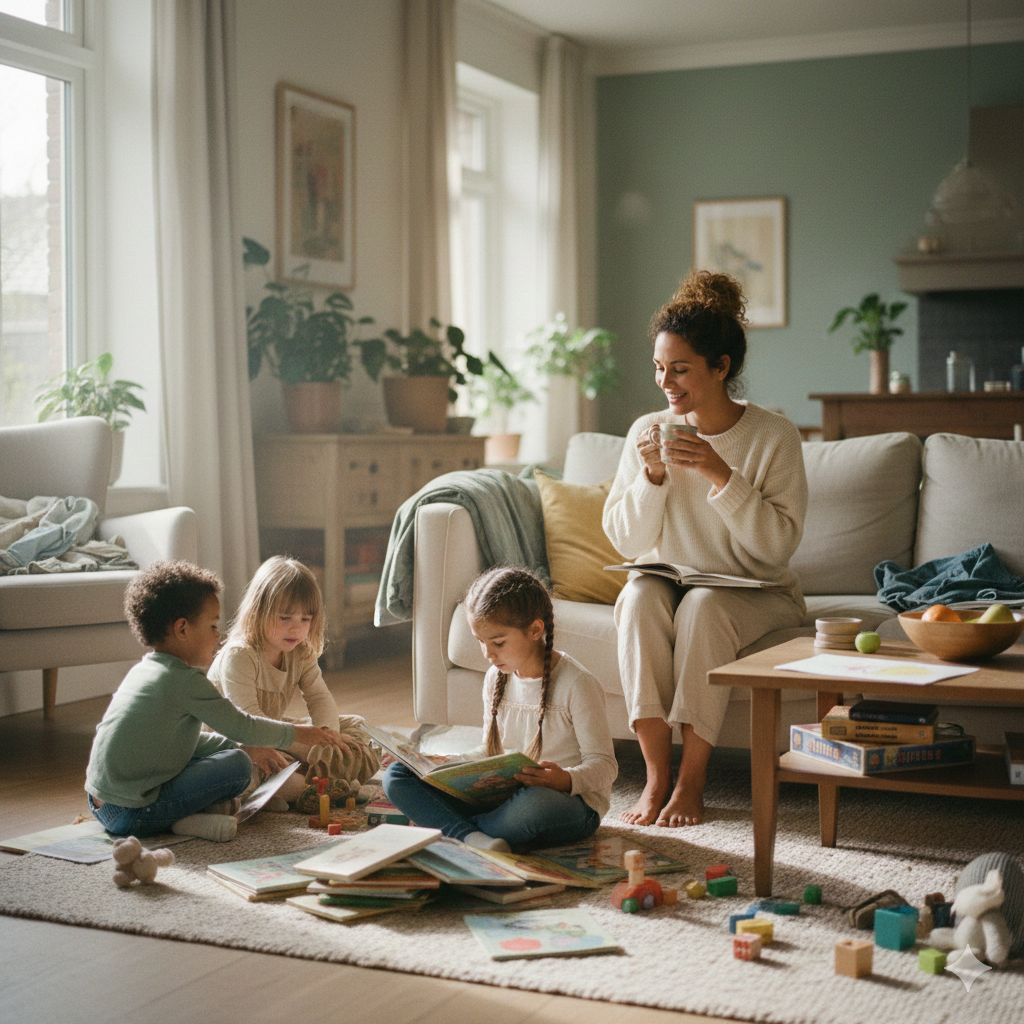
Parenting in 2026 doesn’t look louder, busier, or more impressive on social media.
It looks calmer, more intentional, and more honest.
Moms everywhere are quietly shifting how they parent — not because they stopped caring, but because they’ve learned that burnout, guilt, and constant pressure help no one.
If you’ve felt this shift in your own home, this post is for you.
Here are 10 parenting shifts moms are embracing in 2026 — without shame, comparison, or judgment.
1. Letting Go of Perfect Parenting
One of the biggest changes moms are making in 2026 is releasing the pressure to do everything “right.”
Perfect parenting used to look like:
- Homemade meals every night
- Organized schedules
- Educational activities at all times
- Smiling kids and a spotless house
But moms are realizing that chasing perfection often leads to exhaustion, frustration, and unnecessary guilt.
Now, more moms are choosing:
- Connection over performance
- Presence over appearances
- Progress over perfection
Kids don’t need a perfect parent.
They need a present, emotionally available one — and that starts with giving ourselves grace.
2. Mixing Gentle Parenting With Clear Structure
Instead of swinging between extremes, moms are finding balance.
In 2026, many families are blending empathy with boundaries — often called hybrid parenting.
This looks like:
- Acknowledging emotions without removing expectations
- Teaching accountability without shame
- Holding limits while still being kind
For example:
- “I understand you’re upset — and the rule still stands.”
- “Your feelings matter, and we still need to clean up.”
Kids thrive when they feel safe and guided.
This approach helps children build emotional intelligence while learning responsibility — without chaos or fear.
3. Protecting Mom’s Mental Health (Without Apologizing)
Moms are finally saying the quiet part out loud:
You can’t pour from an empty cup.
In 2026, more moms are:
- Setting boundaries with family, work, and commitments
- Taking breaks without explaining themselves
- Treating rest as a necessity, not a reward
Mental health care isn’t selfish.
It’s preventive care — for the whole family.
When moms protect their emotional and mental well-being, they show their children how to value themselves too.
4. Talking Honestly About Money at Home
Money conversations are becoming more open and age-appropriate in 2026.
Instead of shielding kids completely, moms are:
- Explaining how budgets work
- Teaching the difference between needs and wants
- Involving kids in simple financial decisions
This doesn’t mean sharing adult stress — it means building financial awareness.
For example:
- Why grocery choices matter
- Why some purchases wait
- How saving helps future goals
These conversations build confidence, gratitude, and financial literacy — skills kids will need long after childhood.
5. Using AI as a Helper, Not a Replacement
Technology isn’t going anywhere — but moms are getting smarter about how they use it.
In 2026, AI is being used to:
- Plan meals and grocery lists
- Organize schedules
- Track budgets
- Help with writing, learning, and work tasks
The shift is intentional use.
Instead of letting tech run the household, moms are choosing tools that:
- Save time
- Reduce mental load
- Create breathing room
AI works best when it supports family life — not when it overwhelms it.
6. Simplifying Family Life on Purpose
Simplification isn’t about doing less for the sake of it.
It’s about doing less so you can enjoy more.
In 2026, moms are simplifying by:
- Reducing packed schedules
- Decluttering toys and digital noise
- Creating routines that actually work
This often leads to:
- Less stress
- Fewer arguments
- More meaningful time together
Simple routines don’t mean boring lives — they mean families have space to rest, play, and connect.
7. Rethinking “Busy” as Success
Busy used to equal productive.
Now? Moms are questioning that belief.
In 2026, success looks like:
- Evenings without rushing
- Weekends with margin
- Homes that feel calm instead of chaotic
Moms are choosing:
- Fewer activities
- More downtime
- Schedules that support the family instead of draining it
A slower pace often leads to better sleep, improved moods, and stronger relationships — for everyone.
8. Allowing Kids to Experience Healthy Struggle
Moms are stepping back just enough to let kids grow.
Instead of solving every problem, they’re allowing:
- Trial and error
- Problem-solving
- Responsibility
Healthy struggle teaches:
- Confidence
- Resilience
- Independence
This doesn’t mean abandoning kids — it means guiding them without taking over.
Kids who learn they can handle challenges grow into adults who trust themselves.
9. Choosing Real Community Over Comparison
Moms are tired of comparison culture.
In 2026, many are choosing:
- Smaller, supportive circles
- Honest conversations
- Communities that uplift instead of compete
That means:
- Fewer highlight reels
- More real-life connection
- Support without pressure
Real community reminds moms they’re not alone — and that everyone is figuring it out as they go.
10. Giving Themselves Permission to Change
Perhaps the most powerful shift of all.
Moms are realizing:
- It’s okay to change your parenting style
- What worked before may not work now
- Growth doesn’t mean you were wrong
Life seasons change. Families change. Needs change.
Giving yourself permission to adapt isn’t failure — it’s wisdom earned through experience.
Final Thoughts
Parenting in 2026 isn’t about doing more.
It’s about doing what matters most — with less guilt, less noise, and more peace.
If your parenting looks different than it used to…
you’re not behind.
You’re growing.